 BTC SNIPERS
Open Interest and delta explained for crypto traders
Price shows where the market went. Open Interest and delta help explain who moved it. Together they separate new positions from positions being closed.
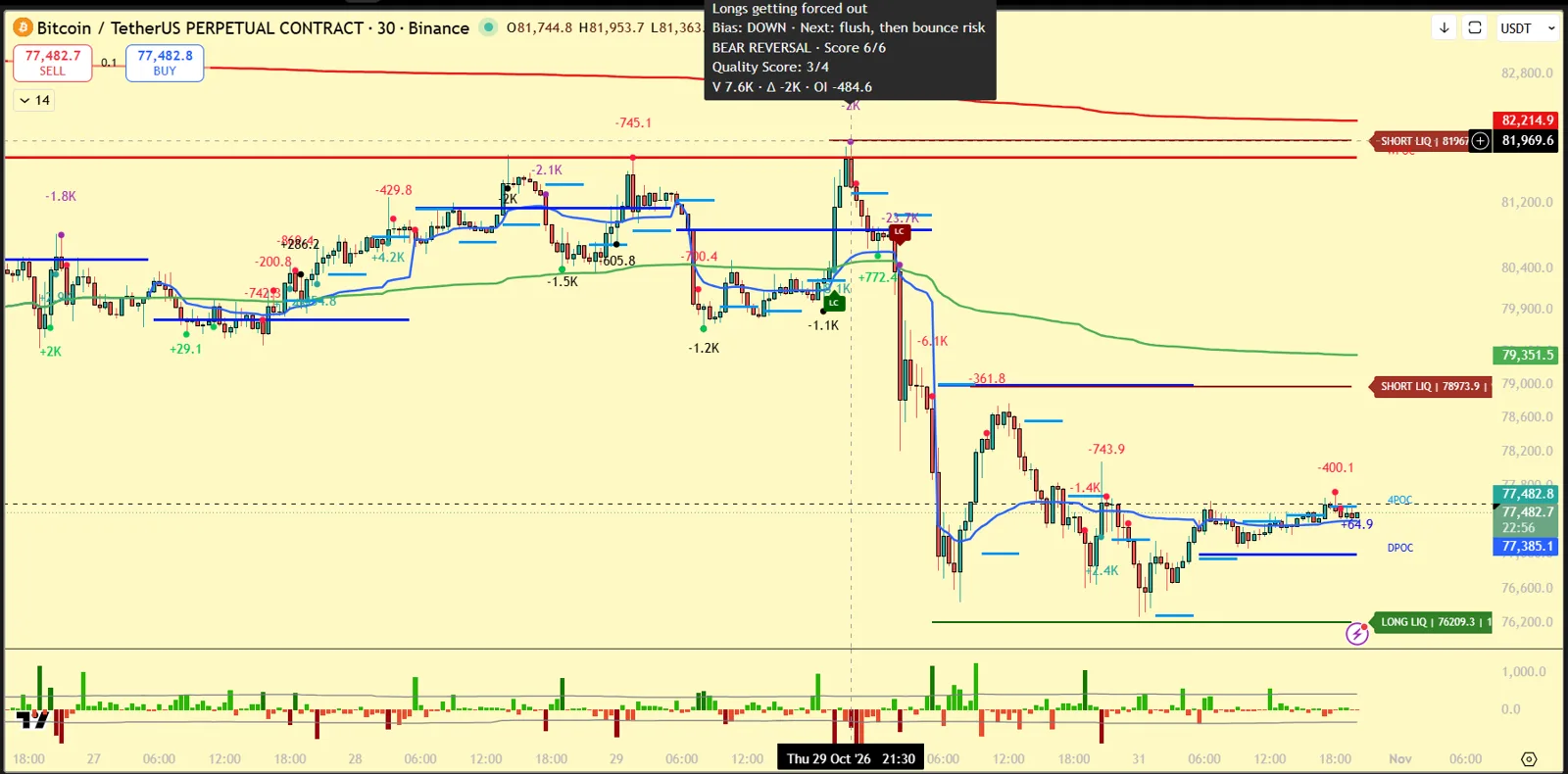
Delta: who was more aggressive
Delta is buy volume minus sell volume, where a "buy" is a trade that hit the ask and a "sell" is a trade that hit the bid. Positive delta means aggressive buyers dominated the candle; negative delta means aggressive sellers did. Intrabar delta looks inside the candle using lower-timeframe data.
Open Interest: positions opened or closed
Open Interest (OI) is the number of open futures contracts. It rises when new positions are opened and falls when positions are closed.
Reading price and OI together
- Price up, OI up – new longs entering.
- Price down, OI up – new shorts entering.
- Price down, OI down – longs closing or being liquidated.
- Price up, OI down – shorts closing (short covering).
When delta agrees with the move (for example price up, OI up and positive delta), the reading is stronger. When they disagree, it is a reason for caution – for example absorption, where large passive orders soak up aggressive buying or selling.
Trapped traders
A candle can close up while most of its intrabar volume was selling – or close down while most of it was buying. The aggressive side ended up on the wrong side of the close. If price moves further against them, they may have to exit, which can add fuel to the move.
How Institutional Activity shows this
BTC Snipers Institutional Activity combines intrabar delta, Open Interest events (new longs, new shorts, long liquidation, short cover), trapped-trader candles, a reversal score, session POCs, VWAPs and estimated liquidity levels in one panel, with plain-language tooltips. The OI layer needs a symbol with Open Interest data, such as crypto perpetual futures.
See it on a live chart
Sniper Pro V2 and BTC Snipers Institutional Activity draw these levels and setups for you on TradingView.
Educational content only. Not financial or investment advice. Trading crypto derivatives carries a high risk of loss. See the risk disclaimer.